

Teaching
Composer sound designer and producer and Educator
Miguel composes, creates sound designs and produces music in a state-of-the-art recording studio using virtual instruments and harmonica for movies, TV, radio and theater.
In addition to his expertise in music education, Miguel instruct recording techniques, sound design for film and theatre, mixing and mastering, and optimal microphone placement. Leveraging his extensive background in theatrical productions, he also offer specialized training in fundamental lighting principles and stage carpentry, complemented by my capability to design and construct studios, and web design.
Member of the “top Reedsters Club” The Top Professional Harmonica players of the world.
Quotes; Junior Wells “ You is one Mother F##!%^^en harp player.”1994
Multi-Instrumentalist: Harmonica, Vocals, Flute, Keyboards, Saxophone
Miguel is best known as a harmonica player. He studied under the best in the business: James Cotton, Mark Hummel, Sonny Junior, William Galison and Howard Levy. Since his first jingle in the early ’80s, he has done countless sessions. carried a manhattan 802 union card for 10 years, with credits on TV, Radio and Film as well as music genres as diverse as Gyspy Jazz, Reggae, Blues, Americana, HipHop and Electronic.
Music education/ voice/ flute/ piano: Two years studying piano and music theory, privately with Chris Cheney. He has a Manhattan school of Music master degree. Two year studying Flute with Art Web and one year with Jean Cheney studying flute. A year of voice and phrasing lessons with Sam Harkners.
Teaching harmonica: Taught harmonica at the New School from 1990-93, privately for over 30 years. NYC Blues Harp Club 1993-2000 Founder: I created a teaching forum for famous harmonica players that were on the road, to come in and teach to about 30 to 100 students.
Some of the teachers were Annie Raines, Paul Oscher, Adam Gussow, Steve Guyger, Rick Estrin!
My sessions privately, He talks over the class with his students so it will be successful. Every harp teacher He studied with and the players that came to the NYC Blues harp club taught him a books worth!
Presently he teach beginner flute, voice, recording and video production and the harmonica, harmonica books are available on request.
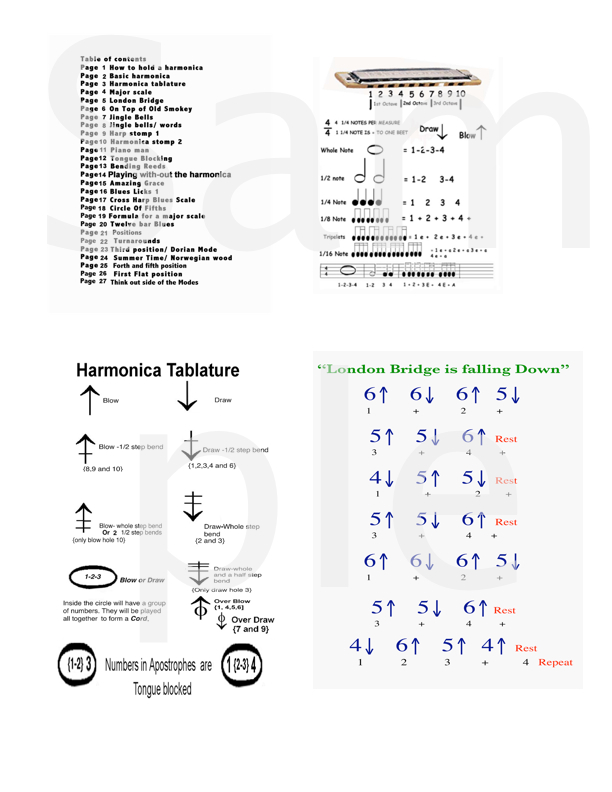
Harmonica book available for students
Harmonica Lessons though Skype, Zoom and FaceTime, $55 per hour, Session work $250 per track and he only takes payment though paypal.
Miguel plays the Super 64 Chromatic and the Blue Moon Hohner Special 20’s Corian®. A Octave bass harmonica made by Huang. Miguel learned to customizes his harmonicas from one of the best, Richard Sleigh in-order to get a professional in-tune tone.
Open Hole wood and sterling silver flutes.
For detail of Miguel’s theatrical and music production.
For detail of Miguel’s recording studio
For examples of his synthesizer programming, treatments of voices and real instruments and virtual instruments manipulated through computer techniques
Here is a basic lesson on recording.
Learn each processor and understand the fundamentals.
There are different types of compressors, most are used to either even out a track, some are better at leveling the track and others accentuate it.
I usually like to use two compressors, one to give it presence and another to smooth it out; make sure you don’t overcompress.
There are different types of EQs, parametric and graphic.
Parametric EQs have multiple points throughout the audio spectrum that you can either cut out or accentuate and cover a certain distance in the EQ spectrum.
Learn how each instrument dominates certain frequencies; for instance, the kick drum and bass live in the lowest frequencies and need to share those frequencies.
I like to take my synthesizer and pianos, which cover some of that lower frequency, and minimize that particular area so that the bass drum and the bass guitar dominate that area but give it enough presence so you can hear it.
Once you’ve catered to each individual track, learn about panning and how to give each instrument the required space and focal point.
There are different types of panning; study them. Each DAW (Logic Pro, Fruity Loops, Cubase) has options.
A common mistake is to pan them too far. once you’ve pinned them. If you have the option to take your stereo track and place it in mono to see if everything still has the presence required do so. I have an external mixer that allows me to toggle back and forth from stereo to mono
Speaking of which, either get some good headphones or preferably speakers. And a good audio interface to record things like guitars and vocals and to send out a proper mix from your computer.
Learn about aux channels and buses. Most people don’t put reverbs on the actual track; they use an aux track and bus it to a track to give it some flavor but not drown it with reverb, more subtly.
I also group tracks by changing the main output to a bus and send it to an aux track, like for instance, drum tracks that usually take 4 to 6 individual tracks.
Once you’ve catered to each individual track, you can bus them to a stereo track and do some more minimal processing, and you can also automate. Learn how to accentuate and how to shape each track by canceling unneeded frequencies.
There’s plenty on YouTube to direct you in more detail about each processor. Hope this helps.
For examples of Miguel’s music and video productions.
Testimonies.
Dean Landew
Singer, Songwriter, Musician, Producer
“Miguel is the best harmonica player I’ve ever worked with. Not just the best blues player. The best harmonica player. His range is exceptional. He can switch styles on a moment’s notice, and he’s always willing to venture into whatever territory will enhance the piece of music he’s working on at the time. All this, and he’s a genuinely nice guy too.”
Marco Heiland
Private Instructor
”I met Miguel in 2008, when I was looking for a music and harmonica instructor. It was a unique experience. The lessons were the best I’ve ever had; the contents ranged from music history, production to actual playing instruction. The results I got were really great, and I have no words to thank him enough!”
Mark Tipton
Trumpeter, Composer, Professor at New England Conservatory
”Miguel Weissman is one of my favorite musicians to work with! His incredible harmonica playing, his vast knowledge of audio engineering and MIDI programming, and his vibrant creative spirit makes every encounter with him a joy, and a major learning experience. I highly endorse his work!”.
Richard Hunter
Harmonica instructor and musician
“I heard Dean Landew’s record “Indestructible Voices,” which features NYC-based Miguel Weissman on harmonica. Weissman is heavily featured, and this record plays like Springsteen with Magic Dick in the lineup. If you like rock harp, you’re going to eat this record up. Attaway to go Miguel!”